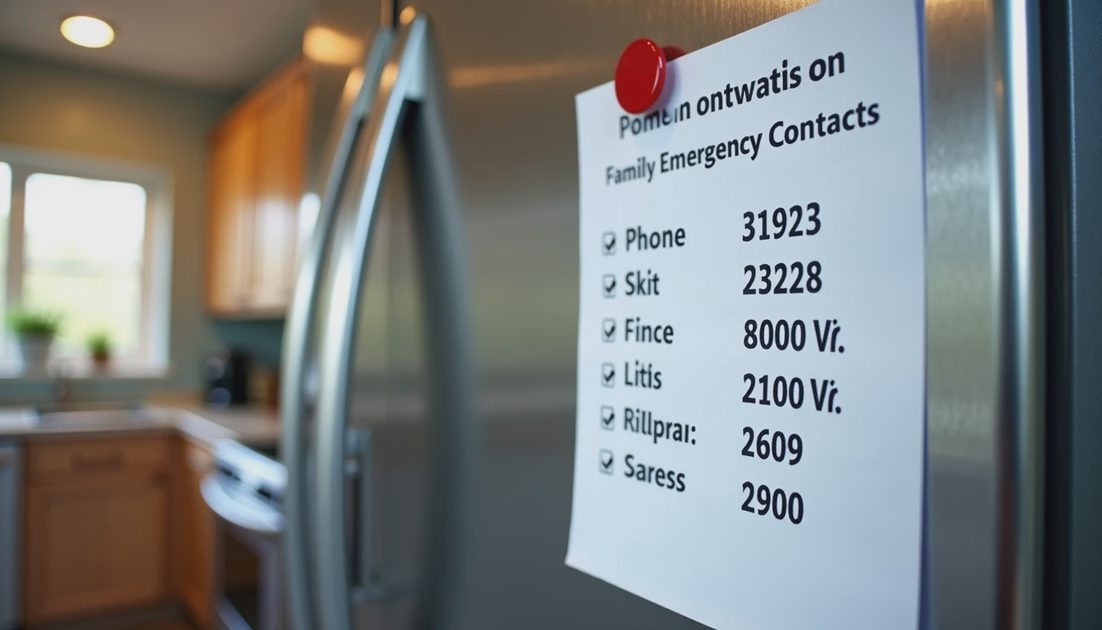
Families need a way to act quickly when someone is locked out, scammed, or missing a device. Writing every password on a sheet of paper creates a new risk. A better approach is an emergency sheet that lists the right contacts, account identifiers, and recovery paths without storing the secrets themselves.
This is the family emergency sheet system we use. It is designed so a spouse or adult child can start the first hour of response without needing every login.
I built the first version after realizing that if my phone and laptop were both unavailable, Megan would not know which carrier number to call or which email was the recovery address for the bank. The sheet closed that gap without creating a password list that could be stolen.
The same logic applies in the other direction. If Megan’s accounts were locked, I would need the same map. The sheet is a household tool, not a one-person backup.
What the Sheet Contains
Full names and dates of birth for household members (for identity verification with companies)
Carrier names and the official loss/fraud phone numbers
Primary email addresses used for recovery (not the passwords)
Bank and credit-card institution names and the official fraud numbers from the back of cards or statements
Location of any password manager emergency kit or printed recovery codes (not the codes themselves if they can be stored more securely)
Preferred clean-device plan (whose spare phone or computer can be used)
Location of the evidence-folder template or blank pre-call sheets
Preferred order of notifications if one adult is unavailable (who to call next in the family)
What the Sheet Deliberately Omits
Actual passwords
Full Social Security numbers (store those with higher security if needed for specific processes)
Authenticator seed phrases or backup codes unless they are kept in a sealed, separate, more secure location referenced only by pointer
Detailed account balances or financial statements
The sheet is a map, not a keyring. Anyone who finds it should be able to start the right phone calls and locate the right recovery paths without being able to log in as you.
How to Keep It Current
Review the sheet twice a year and after any major account change. When a carrier number or primary email changes, update the sheet the same week. An outdated sheet is almost as dangerous as no sheet.
Store one copy in a known household location and consider a sealed copy with a trusted out-of-household relative if that fits your family risk model.
Set a recurring calendar reminder for the review. Pair it with another household task so it does not depend on memory alone. When you update the sheet, initial and date the bottom so everyone knows which version is current.
Item on sheet | Why it helps in an emergency | What stays off the sheet |
|---|---|---|
Carrier fraud number | Speeds SIM / service lock | Account passwords |
Bank fraud numbers | Speeds card freezes | Online banking logins |
Primary recovery emails | Guides password-reset order | The passwords for those emails |
Clean-device plan | Avoids using a compromised phone | Device passcodes |
The table is a reminder, not a complete template. Add the specific institution names and numbers that apply to your household. Remove rows that do not apply. The sheet should feel personal and short enough to scan under stress.

Practice Once
Walk through a pretend lockout with your spouse or adult child using only the sheet. Notice what is missing. Fix it before a real incident. The practice run is usually uncomfortable for five minutes and valuable for years.
During the practice, time how long it takes to find the carrier fraud number and the primary recovery email. If it takes more than a minute, the sheet needs clearer labels or a better storage location. Also practice the clean-device step: identify which spare phone or computer would be used and confirm it is not signed into the affected accounts.
Updating After Real Incidents
After any real lockout or scam, ask what information was missing from the sheet and add it. Also remove anything that proved unnecessary or that increased risk. The sheet should get shorter and more precise over time, not longer and more cluttered. A yearly review is the minimum; a post-incident review is the higher-value habit.
Stop the damage. Save the proof. Take the next step.
A family emergency sheet does not replace good individual security habits. It makes those habits usable by the people who will actually be helping when something goes wrong. Keep it boring, current, and free of secrets that do not belong on paper. The best emergency sheet is the one a tired, worried family member can use at 11 p.m. without calling a technician. If it meets that test, it is doing its job. Make the test real: hand the sheet to someone else in the house and ask them to start a pretend carrier lock. Watch where they hesitate. Fix those spots. Repeat the practice after any major change to carriers, banks, or primary emails. The sheet is only as good as the last time someone other than you successfully used it.
No comments yet.