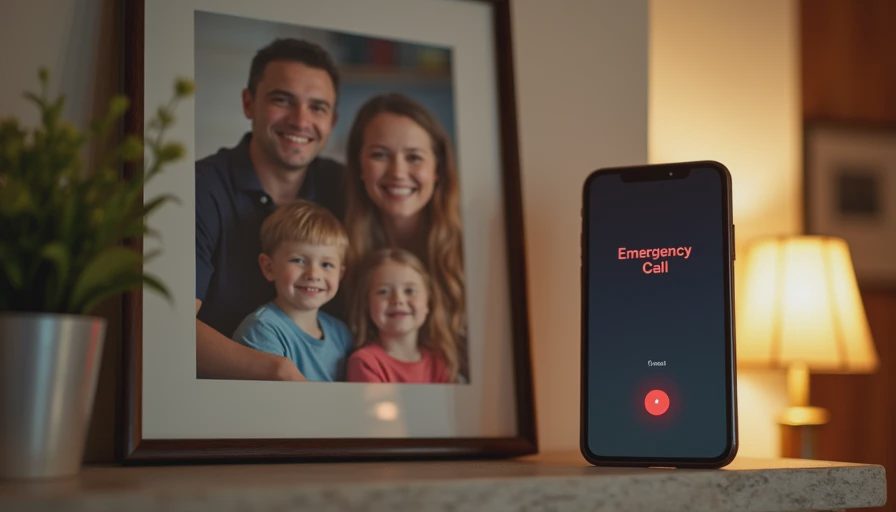
An AI-generated voice can sound like your child, your parent, or your spouse. The call may claim an emergency and ask for money, codes, or silence. A family code word helps. It is not enough by itself.
This article explains how we treat AI voice risk in our household: the code word, the verification callback, and the financial and account steps that matter when fear is high.
I am less interested in debating how perfect the voice clone is and more interested in what a family does in the first two minutes of the call. Perfect detection is hard. Good habits are available today.
The Code Word
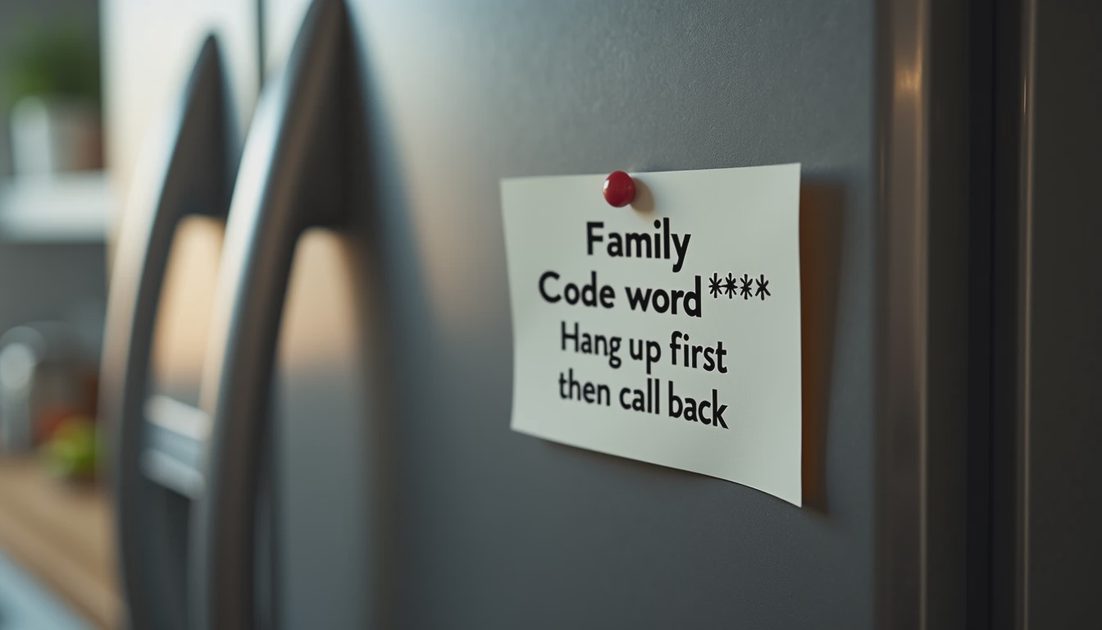
Agree on a word or short phrase that only the family knows. If a call claims to be a family member in crisis, the real person should be able to provide the code word. If they cannot, treat the call as hostile.
Practice the rule when everyone is calm. A code word that has never been rehearsed is harder to use under stress.
Choose something that is not guessable from social media or common family facts. Avoid pet names that appear in public posts. Change the word if it is ever spoken in front of strangers or on a recorded line. The code word is a shared secret; treat it with the same care you give a spare key.
The Callback Rule
Even with a code word, prefer hanging up and calling the family member back on a known number. AI voice scams often try to keep you on the line. A callback to a number you already trust breaks that control.
If the “emergency” claims the real phone is unavailable, use secondary verification: contact another family member, check shared location features you already use, or wait for a second independent signal before sending money.
Attackers may claim that calling back will “waste critical time.” That pressure is the scam. Real emergencies are chaotic; they are rarely improved by sending gift cards or reading authentication codes to a stranger on an inbound line. The callback is the pause that restores your agency.
Money and Account Rules Under Pressure
Do not send money, gift cards, or crypto on the basis of a single urgent call
Do not read out one-time codes or passwords
Do not grant remote access to any device
If money was already sent, contact the bank or payment service immediately and document everything
These rules feel obvious until a voice that sounds exactly like someone you love is crying on the phone. Write them down next to the code word.
Scammers know that fear collapses careful thinking. The written rule is a second brain for the moment when the first brain is flooded. Read the card out loud if you need to. The few seconds of delay are a feature, not a failure.
Layer | What it does | Limit |
|---|---|---|
Code word | Quick identity check | Can be overheard or guessed over time |
Callback to known number | Breaks attacker control of the channel | Requires the real person to be reachable |
No money on first contact | Stops the most common goal | Requires emotional discipline |
Second-channel verify | Adds independent confirmation | Takes extra minutes |
After a Suspected AI Voice Scam
Save the number and any voicemail
Report through FTC and, if relevant, local law enforcement
Tell other family members so they are not targeted with the same voice sample
Review whether any account information may have been exposed in prior breaches that made the voice scam more convincing
If money or codes were given, treat the related accounts as compromised and follow the freeze-call-document sequence from the Money in Motion guides. Speed still matters after the call ends.
Stop the damage. Save the proof. Take the next step.
A code word is a useful layer. A callback habit is a stronger layer. A household rule against sending money on first contact is the layer that stops the financial loss. Use all three. AI will keep improving the voice. The verification habits can still hold. Update the family card when members change phones or when a real scare teaches a new lesson. The plan only works if it stays current and if everyone who might answer the phone has practiced the first two minutes. Practice once. Update often. Refuse the rush.
I have practiced the callback rule with our kids using ordinary “I’m running late” calls so the habit exists before any high-stakes moment. The practice feels slightly silly. The alternative—improvising verification while someone is screaming—is worse.
Write the code word, the callback rule, and the no-money rule on one card. Keep the card where adults who might receive such a call can find it. Review it when you review the family emergency sheet. Small, repeated preparation beats a perfect plan that nobody remembers.
If a real emergency ever collides with these rules, the callback and second-channel checks still help you confirm identity before you move money. The rules are not about distrusting family. They are about distrusting the channel when the channel is a phone call that arrived out of nowhere with a perfect-sounding voice and a demand for speed.
No comments yet.