

Banks and credit bureaus have internal processes. When those processes stall, ignore you, or leave you without a clear next step, state and federal consumer agencies become the escalation path. Knowing when to use the Consumer Financial Protection Bureau (CFPB), your state attorney general, or both keeps the effort proportional to the problem.
This is a practical decision guide based on common consumer patterns and personal experience helping family members navigate stalled fraud and identity-theft cases. It is not legal advice.
I have seen two opposite mistakes: people who escalate on day one before the bank has had any chance to respond, and people who wait months after every internal path has gone silent. The useful middle is documented, patient, and ready with an evidence file when the company’s timeline expires without a real answer.
What Each Agency Generally Handles
CFPB focuses on financial products and services under federal consumer-finance laws—credit cards, bank accounts, mortgages, credit reporting, debt collection, and similar areas. Their complaint system creates a formal record and often prompts a response from the company.
State attorneys general handle a broader mix of consumer-protection issues under state law. They may take interest in patterns of fraud, scams targeting residents, or companies that ignore state requirements. Many AG offices also provide consumer complaint portals.
Neither agency is a collection service that guarantees your money back. Both can increase pressure and create official documentation.
Check the current official websites for filing instructions, because portals and required fields change. Use only the official government domains. Bookmark them in advance if you can, so you are not searching under stress later.
When to Escalate Beyond the Company
Consider agency contact when:
You have already reported the problem to the bank, bureau, or company in writing and received no meaningful response within their stated timeline
Deadlines are approaching and the company will not confirm the status of your claim
You have evidence of a pattern (multiple unauthorized accounts, repeated ignored freezes, etc.)
The amount or harm is significant enough that an official record matters for later steps
Do not skip the company’s own process. Agencies typically expect you to have tried the direct route first.
Also consider escalation when the company’s response is a form letter that does not address the specific facts you provided. A generic “we take fraud seriously” reply without a reference to your reference number or timeline is often a signal that the case has not been meaningfully reviewed. Your evidence file makes that gap visible.
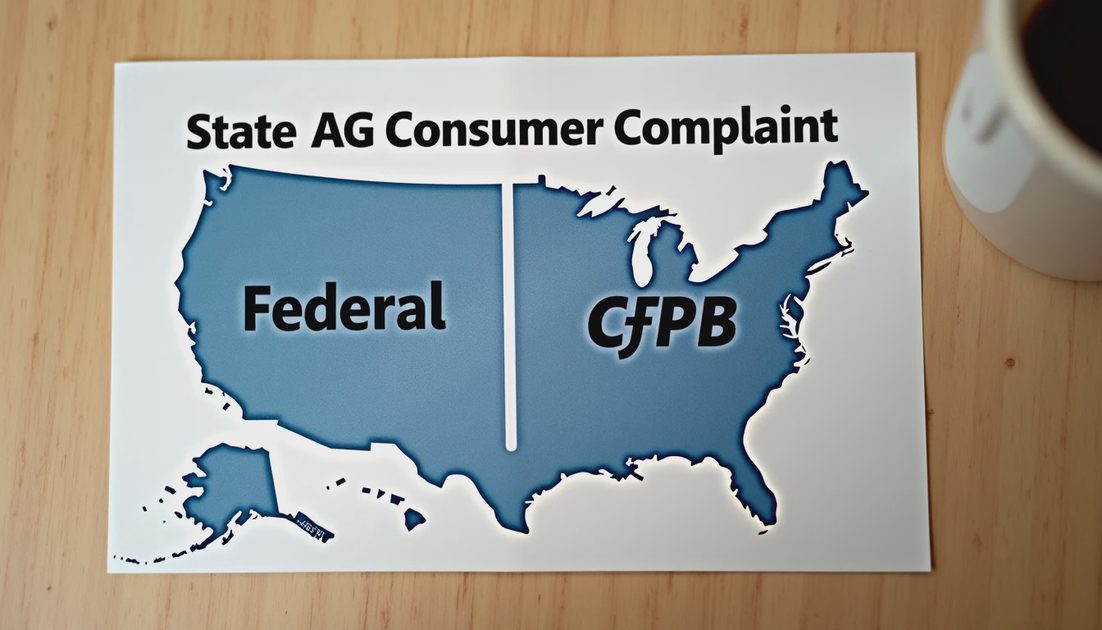
CFPB, State AG, or Both?
Situation | Lean toward CFPB | Lean toward State AG | Consider both |
|---|---|---|---|
Bank or credit-card dispute stalled | Yes | Sometimes | If state issues also present |
Credit-report or freeze problems | Yes | Yes | Often useful |
Local scam targeting many residents | Maybe | Yes | Yes |
Identity theft with multi-state actors | Yes | Yes | Yes |
Purely state-regulated entity | Less likely | Yes | — |
When in doubt, filing a clear CFPB complaint and informing your state AG of the same facts is often reasonable. Keep the evidence file consistent across both submissions.

How to Prepare Before You File
Use the evidence file described in the previous article:
Master index with timeline and reference numbers
Screenshots and correspondence
FTC Identity Theft Report if applicable
List of what you have already asked the company to do
In the complaint narrative, stick to dates, amounts, actions taken, and unanswered requests. Calm factual language is more useful than anger.
A useful structure for the narrative is: (1) what happened, (2) when you discovered it, (3) what you asked the company to do and when, (4) what response you received or did not receive, and (5) what you are asking the agency to review. That order helps a reviewer see the gap without hunting through attachments.
After You File
Save the confirmation numbers from each agency. Note any deadlines they give you for company responses. Continue monitoring your accounts and credit freezes. Agency complaints do not replace ongoing vigilance.
If the company responds through the agency portal, download and save that response in your evidence folder. If the response is incomplete or incorrect, you can reply through the same system with additional facts. Keep the tone factual. The goal is a clear record, not a long argument.
Also remember that some matters may eventually need a private attorney or a different legal path. Agency complaints are often a useful intermediate step; they are not the only step. When the amount at stake is large or the facts are complex, consider consulting a qualified professional after you have completed the immediate freeze, report, and documentation work.
Stop the damage. Save the proof. Take the next step.
Escalation is a tool, not a magic fix. Used after direct efforts have failed, and supported by a clear evidence file, it gives your case a better chance of being taken seriously. The agencies cannot undo every loss, but they can make silence more expensive for the company that chose it. Use them when the direct path has been tried in good faith and documented. That sequence—company first, then agencies, with a clear file—gives ordinary consumers the best practical chance of being heard.
No comments yet.