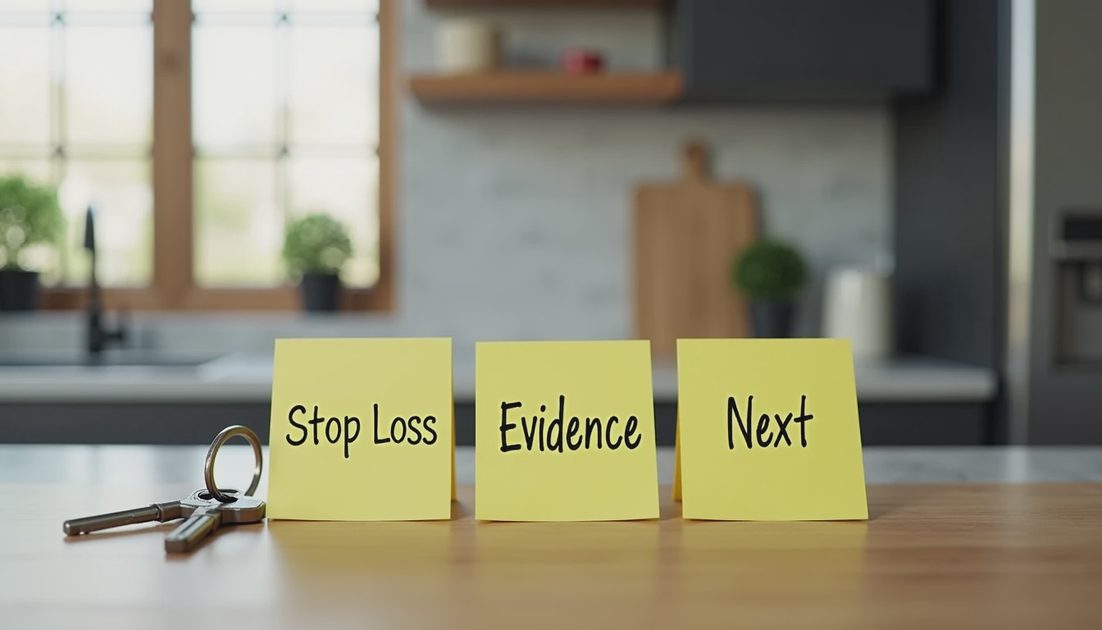
Every guide on this site returns to the same three sentences.
Stop the damage.
Save the proof.
Take the next step.
They are not a slogan for a poster. They are the order of operations when an account is taken over, money moves without permission, a phone disappears, or a family member is targeted by a scam. This final launch article explains why the order matters and how to use it when the situation does not match any single checklist.
I started writing the sequences on this site because I needed them myself—and because the people I love needed them without jargon. The three-part rule is what remained after the checklists were written. When you cannot remember which article applies, the rule still tells you what to do first.
Stop the Damage
Before you understand the whole story, limit what can still be lost.
Freeze cards and logins
Suspend carrier service if a phone is missing
Sign out sessions and change passwords from a clean device
Hang up on the scam call and refuse the payment demand
Stop clicking and stop approving prompts you did not initiate
Stopping damage is often imperfect. It is still the first job. A perfect investigation that starts after another transfer leaves is not a better plan.
People lose time arguing about how the attacker got in. That argument can wait. The card that is still active cannot wait. The session that is still open cannot wait. Stop the damage first; analyze later.

Save the Proof
While the situation is still visible, capture it.
Screenshots with dates and URLs
Call reference numbers and representative names
Timelines of discovery and actions
Official report confirmation numbers
A single evidence folder that a stranger could open and understand
Proof fades. Tabs close. Memories blur. The file you build in the first hour is the file you will need in the third week.
You do not need a perfect filing system in minute five. You need a dated screenshot and a reference number written somewhere that will not vanish when the phone restarts. Organize later. Capture now.
Take the Next Step
After the immediate bleeding stops and the proof is secured, do the next concrete action—not all the actions.
Submit the recovery form
File the FTC report
Call the bank’s fraud line with your pre-call notes
Report the AI-generated image through the official channel
Update the family emergency sheet
One clear next step beats a paralyzed list of twenty. If you cannot decide which step is next, choose the one that creates an official record or stops another loss. Then stop and reassess. Momentum from small completed actions is more useful than a stalled master plan.
Phase | Question to ask yourself | Example actions |
|---|---|---|
Stop the damage | What can still get worse right now? | Freeze, suspend, sign out, hang up |
Save the proof | What will disappear if I wait? | Screenshot, note reference numbers |
Take the next step | What is the single most useful action now? | One report, one call, one form |
When the Situation Is Messy
Real incidents mix categories. A SIM swap becomes a bank problem. A phishing text becomes an email lockout. A scam call becomes an identity-theft week. The three-part rule still works because it does not require you to name the category perfectly before you act.
Stop what is still bleeding.
Save what will help you later.
Do the next useful thing.
Then repeat.
You do not need to open five articles at once. Open the rule. Apply it once. Then open the specific guide that matches the damage you just stopped. The site is organized to support that path, not to demand that you diagnose the entire incident before you freeze a card.
How This Site Uses the Rule
Account Lockdown articles emphasize clean devices and recovery order.
Money in Motion articles emphasize freeze-call-document sequences.
Identity & Paper Trails articles emphasize same-day freezes and usable evidence files.
Devices articles emphasize call order and family sheets.
Human Damage Desk articles emphasize dignity, official reports, and refusal to send money under pressure.
Different problems. Same order.
Stop the damage. Save the proof. Take the next step.
If you remember only one thing from this site, remember the order. The detailed checklists will be here when you need them. The order will get you to the right checklist without making the hole deeper first.
You do not need to be technical to follow the rule. You need to be willing to pause the panic long enough to freeze what can still be frozen, capture what can still be captured, and choose one next action that is under your control. That is ordinary courage. It is also enough to change the ending of many digital emergencies.
Keep the three sentences where you can see them—on a card, in a notes app, on the family emergency sheet. When the next alert arrives, you will not need to invent a plan. You will only need to begin. Stop the damage. Save the proof. Take the next step. Then open the checklist that fits. You already know the order.
No comments yet.